





nf-core is a community-driven initiative that provides a curated set of analysis workflows built using Nextflow . These workflows are designed to be scalable, reproducible, and standardised, ensuring high-quality bioinformatics analyses across different research domains. By fostering collaboration and best practices, nf-core helps streamline computational biology and genomics research.
GHGA collaborates with nf-core to develop, maintain and support the use of standardised bioinformatics workflows. Rather than creating new workflows independently, GHGA works with nf-core and other relevant communities to improve and adapt existing pipelines for genomic and phenotypic data processing. This ensures that GHGA’s workflows align with widely accepted community standards while remaining interoperable and efficient.
This collaboration helps to streamline our pipelines, avoid redundancy, enhances workflow sustainability, and supports a FAIR-compliant data analysis ecosystem. By integrating with nf-core, GHGA contributes to open science by improving workflow functionality and usability, making it easier for researchers to process genomic data in a secure and reproducible manner.
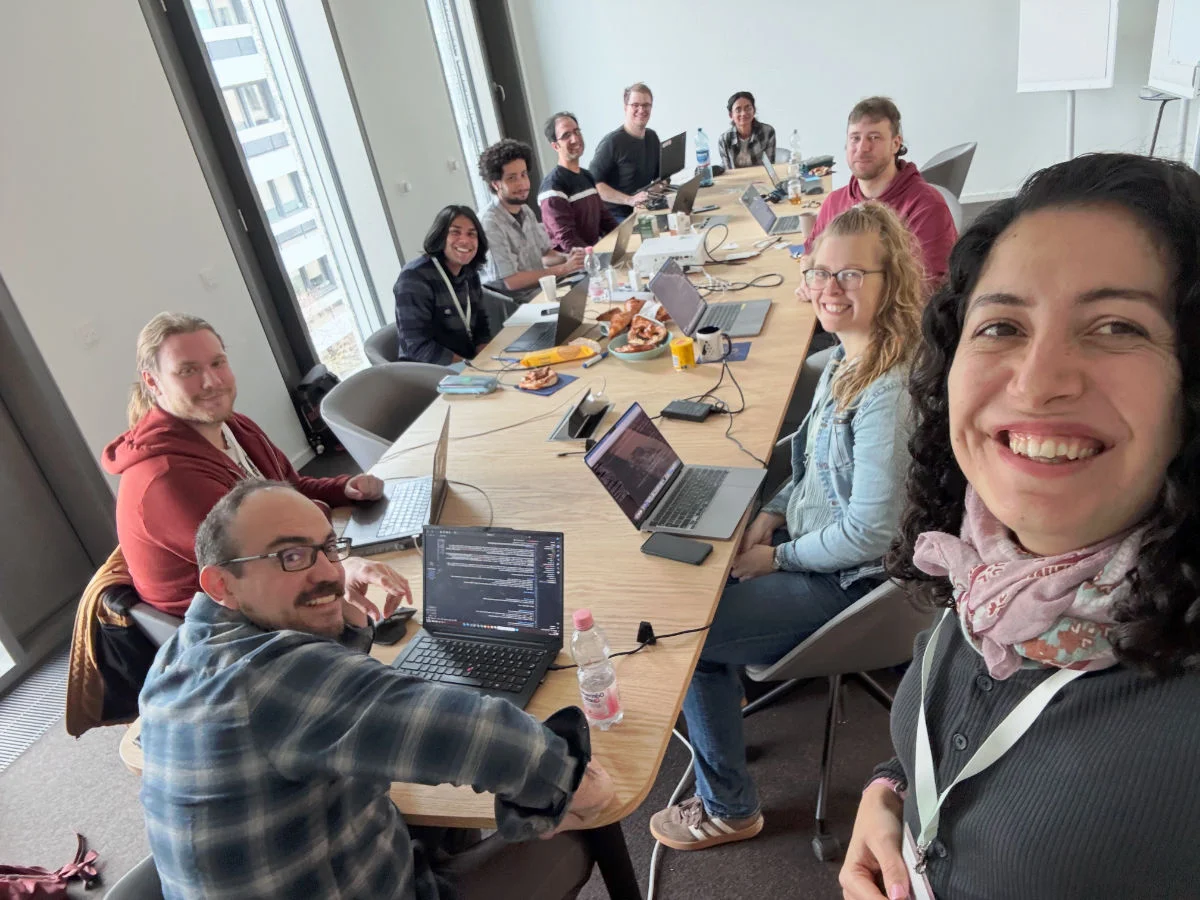
As part of the global nf-core hackathon, GHGA hosted a local site in Heidelberg, bringing together researchers and developers for a day of collaborative work on community-driven bioinformatics pipelines.
Learn more
Join us for the nf-core hackathon in Heidelberg. GHGA is excited to host the local hub event, bringing together the community for three days of coding, innovation, and tackling all things nf-core.
Learn more
New to spatial transcriptomics? Join our practical webinar designed for guiding researchers through the complexities of spatial transcriptomics data.
Learn more