





GHGA Welcomes Its Scientific Advisory Board in Heidelberg
- 06 Nov 2026
- Ulrike Träger
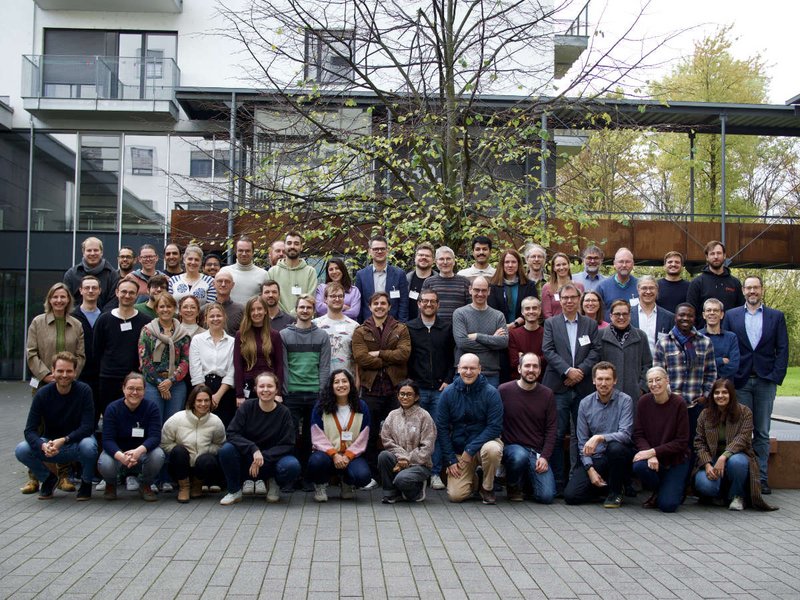
From 3-5 November 2026, the GHGA Annual Meeting, brought together consortium members for three days of scientific exchange, strategic discussions and collaboration. As special guests we welcomed members of the Scientific Advisory Board (SAB). The meeting provided an opportunity to reflect on GHGA's progress, discuss its future role and priorities, and receive valuable feedback from the SAB on the consortium's development.
Day 1: Taking stock and looking ahead
The meeting opened with an overview of GHGA's mission, current status, and strategic perspectives. With more than 200 datasets published in the portal, GHGA continues to make important progress in establishing a sustainable infrastructure for human omics data sharing.
The programme continued with updates on GHGA's ongoing work, from infrastructure development and ethical, legal and social issues to community-driven projects, data services, and outreach and training.
A particular highlight was the public lecture by Prof. Bartha M. Knoppers, entitled "Reimagining Genetic 'Discrimination' with Polygenic Risk Scores?". The internationally renowned expert in health law and bioethics explored how advances in genomic technologies and polygenic risk scores challenge existing concepts of genetic discrimination.
Day 2: Showcasing GHGA and engaging with the Scientific Advisory Board
The second day began with an interactive knowledge fair, giving participants the opportunity to explore GHGA's services and developments through practical demonstrations. These included the GHGA Data Portal, the Secure Processing Environment (SPE), the patient information portal “Meine Genomdaten. Teilen und Helfen.”, and the Spotlight project for genome and variant reanalysis in rare disease.
Further scientific presentations showcased GHGA's contributions to a range of research areas. Daniel Hübschmann talked about developments in precision oncology and genomic newborn screening, while Holm Graeßner highlighted new approaches to diagnosing rare diseases through research reanalysis and European collaboration. Sapna Sharma (Helmholtz Munich/NAKO) provided insights into genomics and molecular phenotyping in the NAKO Health Study, demonstrating the potential of large-scale multi-omics resources for disease research, risk prediction, and precision prevention.
The afternoon was dedicated to an in-depth exchange with the Scientific Advisory Board. Discussions focused on GHGA's role as a research data archive, its long-term funding and sustainability, and the scope of the services it should offer to the research community. These conversations provided an important opportunity to reflect on GHGA's position and ambitions and to consider the priorities that will shape its further development.
The SAB overall impression of GHGA was very positive. The members expressed their appreciation for the progress achieved and the work invested in building GHGA and its infrastructure. They also underlined the importance of supporting efforts such as the research in ethical and legal topics as well as broad outreach activities. This encouraging feedback is an important recognition of the collective efforts of the consortium and something everyone involved can be proud of.
Day 3: Turning discussions into action
The final day focused on networking and collaborative workshops, translating some of the topics discussed during the meeting into concrete areas for further work. Participants explored the cooperation between genomDE Modellvorhaben and GHGA, the ongoing development of the Secure Processing Environment, and the possible implementation of GHGA's Automated Quality Assessment Service (AQuA).
The meeting concluded with discussions on Data Hub capacity planning and financing, as well as the next steps for GHGA.
Looking ahead
The 2026 Annual Meeting provided an important opportunity to bring the GHGA community together, celebrate progress, and discuss the challenges and opportunities ahead. In particular, the positive feedback from the Scientific Advisory Board offered valuable recognition of what the consortium has achieved so far and encouragement for the work still to come.